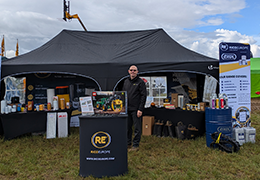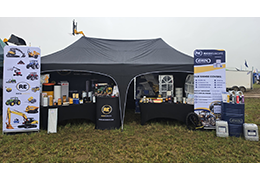
We'd like to say a huge thank you to everyone who visited the RICO Europe stand over the two-day event.
Working safely with farm machinery
When carrying out repairs and maintenance on mobile and stationary machinery it is important to understand the risk factors they come with.
Machinery accidents are caused by a range of factors which can include:
- Missing guards and other safety devices
- Unsuitable machinery for the job on hand
- Poor maintenance
- Lack of training
- Unsafe methods for clearing blockages and making adjustments.
Agricultural Machinery Hazards
Many operators may not be aware of how powerful agricultural machinery is and may become complacent when working on them.
For example, leaking hydraulic oil from a burst hose can project at 3000psi which can easily penetrate the skin.
A PTO shaft can wrap cloths, hair or limbs at a rate of 1.5 meters per second.
Below are some agricultural machines with dangerous moving parts that could cause serious injuries:
- Balers – have twine mechanisms and moving rear doors
- Forage Harvesters – chopping cylinders
- Combine Harvesters – augers in the grain tank and header unit
- Potato Harvesters – rotating rollers and conveyors
- Tractors – hitch mechanisms, PTO’s and PTO shafts
- Power harrows – rotating tines
- Feeder wagons – rotating components in the mixing chamber.
Safe Stop
It is extremely dangerous to carry out any kind of maintenance or repairs on a machine while its under power.
Safe Stop is a measure for all to follow:
- Put the handbrake on
- Make sure the controls are in neutral (equipment made safe)
- Stop the engine (or turn off the power)
- Remove the key (or lock-off the power supply).
As reported by the Health & Safety Executive, many fatal accidents occur when operators try to fix faults or clear blockages while the engine is running.
HSE Case study
An operator was carrying out repairs under a tractor-mounted rotary cultivator. He was crushed when the piece of wood he was using for support gave way and the cultivator fell on him.
Use of axle stands may have prevented this accident. Secure anything that could fall on you or start moving, and always use the correct equipment for the job.
Safe maintenance and repairs
Always follow Safe Stop and make sure the source of power is off and key removed to stop others from starting it when you are working on it.
Source replacement parts and filters from trusted suppliers like RICO Europe. Cheap substandard replacement parts fail prematurely and create safety risks.
Maintenance tips
Lubricating
If the guard is removed to lubricate the machine, never do so when the machine is in motion.
Checking hydraulic system
Hydraulic oil works under high pressure. When checking for leaks, use something to show where the leak is (eg. A piece of card).
Never use your hands to feel for leaks.
Oil pressure should be released before working on the system.
Sharpening
When sharpening components of machinery such as on a forage harvester, only the sharpening should take place with the machine in motion.
All activity before and after sharpening (eg guard removal) should be done with the machine’s components stationary. Use PPE such as goggles to protect from flying particles.
Working under machines
Jacks should always be used when working under raised machines. They should always be correctly positioned and appropriate additional support such as axel stands should be used.
Preventing unintended movement
Where possible, take additional precautions to ensure that moving parts remain stationary.
Hammering
Beware of flying particles, goggles should be worn as protection.
Cleaning
Never clean your machine when it is running and the when guards have been removed.
Always be aware of the danger of falling off or into machinery, particularly in difficult weather conditions.
Make sure you know how to access machines safely, especially large machines such as combines.
Article Credit: Health & Safety Executive