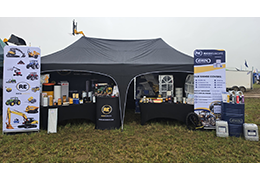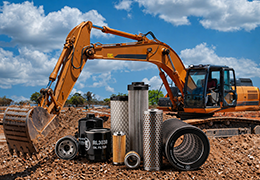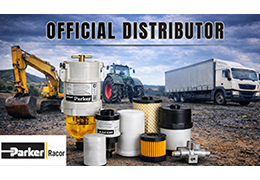
We'd like to say a huge thank you to everyone who visited the RICO Europe stand over the two-day event.
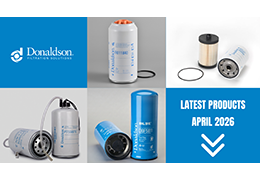
Water, Fuels number one enemy!
High-pressure common-rail (HPCR) systems are intricate and accurate pieces of machinery that require the use of clean fuel to operate without breakdown. Even the tiniest contaminants can lead to engine failure and result in expensive downtime.
However, since HPCR engines have been in use for a considerable amount of time, both original equipment manufacturers (OEs) and operators are well-informed about the issues caused by dirt and other solid particles in fuel. They also understand the significance of effective filtration in both the vehicle and bulk fuel tanks.
Water can pose a significant threat to HPCR fuel system reliability, particularly in regions with high humidity and/or poor fuel quality, according to a survey* conducted by Donaldson Filtration Solutions of on- and off-road service centers. "Some mechanics who participated in our survey revealed that water-related problems are the most significant challenge they encounter," said Doug Lundstrom, Product Manager at Donaldson. "Water-related problems can be quite complicated, and equipment owners may not be aware of the issues or how to address them effectively."
The Impact Water Has on your Engine
While it may be difficult to imagine water as a greater threat than solid particulates like dirt, the truth is that water is an insidious contaminant that can wreak havoc on fuel systems. This is why Original Equipment Manufacturers (OEs) typically require minimal free water in the High-Pressure Common Rail (HPCR) system. Water can cause damage in numerous ways. For instance, when it comes into contact with iron and steel components, rust particles can enter the fuel stream, leading to the etching or abrasion of the system. Additionally, water droplets can cause abrasive wear due to its lack of lubrication compared to fuel. Water can also dissolve certain contaminants in fuel, creating harmful deposits in the fuel stream. The exposure of water to heat and pressure in tight spaces can cause pitting and spalling. Furthermore, in colder climates, water can freeze and become hard particulate, causing significant damage to an engine or its injectors.
These are just the direct complications that water can introduce into a fuel system. If left unchecked, water can interact with certain chemicals in fuel, creating a "soft solid" that can rapidly plug onboard filters or cause deposits that act as hard particulate. The presence of free water in any bulk or onboard tank can cause microbial growth, which quickly plugs filters and creates an acid that corrodes metal components.
Safeguarding your HPCR Engine
To safeguard your HPCR engine, it's best to prevent water from infiltrating your fuel in the first place. Lundstrom advises that it's much simpler to keep water out than to remove it later. Since there are several ways water can seep into your supply, it's recommended that you focus on controlling what you can. Although on-board filtration with robust water removal is essential for most HPCR engines, it shouldn't be your starting point.
For instance, it's critical to protect your bulk fuel storage if you utilise one. Water can enter your bulk tank in three primary ways: through fuel delivery, from the atmosphere, and via condensation. Therefore, effective bulk filtration is crucial. Even the tiniest bulk tank should have inlet filtration to prevent contaminated fuel from mixing with the existing supply. Your pump should also have filtration to eliminate any free water that enters the supply. Furthermore, there should be a filtration system on your tank's vents or breathers to prevent water and dirt from infiltrating through the atmosphere.
Nevertheless, even with triple-layered protection on bulk fuel storage and effective onboard filtration, it's still not enough. Regular tank inspections and cleaning are necessary to ensure no cracks, loose fittings, or broken seals. All transfer points should be frequently inspected, and fuel in the tank must be regularly tested.
Fuel / Water Separators - Shop Now